Showing posts with label Nazis. Show all posts
Showing posts with label Nazis. Show all posts
Tuesday, August 12, 2014


Monday, April 8, 2013
HaShoah 2013
Today is HaShoah, Holocaust Remembrance Day. The day Jews around the world stop and remember those who were murdered by the Nazis and their allies. 6 million+ Jews murdered, 3 million Soviet POWs murdered, 2 million Poles murdered, 1.5 million Romani (Gypsies) murdered, 250,000 Disabled persons murdered, 15,000 Homosexuals murdered. A great blood shed. An orgy of death. Over 12,765,000 men, women and children murdered by men and women who called themselves Christians.


These pictures are just part of the story. The real story are the testimonies of the survivors:
Holocaust Survivor: Felicia Fuksman
Click here if the video doesn't load.
Felicia Fuksman was born in Lodz, Poland. She lived with her parents, two brothers, and two sisters. Felicia's father was a tailor. The family was very poor. Felicia was studying to be a nurse when the Germans attacked Poland. Her father and brother Simon were seized on the street and taken for labor. They weren't seen again. Felicia worked in the ghetto as a "nurse" in a fur factory, where she received extra food. Her older sister Rachel died of tuberculosis. Her younger sister Esther froze to death begging for food on the street. In August 1944, Felicia was deported to Ravensbrück concentration camp and, several months later, to a Nazi labor camp at Wittenberge, Germany. Throughout her long ordeal, Felicia was helped and inspired by her friend Bronia Lewkowitz. After the war, Felicia returned to her family's apartment in Lodz and was cruelly rebuffed by a Polish woman, the new occupant. Felicia was the only one in her family who survived. In 1950, she immigrated to New Orleans where she met Max Fuksman, a fellow survivor from Lodz. They married and had three daughters and 5 grandchildren. Max Fuksman died in a car accident on April 25th, 1982. Felicia Fuksman passed away on October 17th, 2012.
Holocaust Survivor Reflections: Stories of Courage
Click here if the video doesn't load.
The Holocaust didn't happen in a vacuum. People who lived in the nearby towns could not say they didn't know. They could see the people, smell the burning flesh and hear the noise. They were NOT innocent bystanders. Many were even happy that it was happening.
The hatred that inspired the Holocaust has not died. In fact it is stronger than ever and growing in the world. Jews are afraid to walk the streets of European cities wearing the signs of their faith without being assaulted. Politicians in many European countries are telling Jews to either deal with it or leave. And in Universities not only in Europe but in the United States, it is open season on Jews. It is permitted to abuse, assault and discriminate against Jews. The excuse for all of this is anti-Israeli sentiment. But in fact that is a fancy name for the old hatred: ANTI-SEMITISM.
It is only a matter of time before Jews are banned from US Universities, driven out of Europe for good, or murdered by the riled up masses. The old hatred has not died, it is stronger than ever among the Liberal Elites who wish to kill the Jew for the "sins" of their brethren in Israel.
To this we say:


These pictures are just part of the story. The real story are the testimonies of the survivors:
Holocaust Survivor: Felicia Fuksman
Click here if the video doesn't load.
Felicia Fuksman was born in Lodz, Poland. She lived with her parents, two brothers, and two sisters. Felicia's father was a tailor. The family was very poor. Felicia was studying to be a nurse when the Germans attacked Poland. Her father and brother Simon were seized on the street and taken for labor. They weren't seen again. Felicia worked in the ghetto as a "nurse" in a fur factory, where she received extra food. Her older sister Rachel died of tuberculosis. Her younger sister Esther froze to death begging for food on the street. In August 1944, Felicia was deported to Ravensbrück concentration camp and, several months later, to a Nazi labor camp at Wittenberge, Germany. Throughout her long ordeal, Felicia was helped and inspired by her friend Bronia Lewkowitz. After the war, Felicia returned to her family's apartment in Lodz and was cruelly rebuffed by a Polish woman, the new occupant. Felicia was the only one in her family who survived. In 1950, she immigrated to New Orleans where she met Max Fuksman, a fellow survivor from Lodz. They married and had three daughters and 5 grandchildren. Max Fuksman died in a car accident on April 25th, 1982. Felicia Fuksman passed away on October 17th, 2012.
Holocaust Survivor Reflections: Stories of Courage
Click here if the video doesn't load.
The Holocaust didn't happen in a vacuum. People who lived in the nearby towns could not say they didn't know. They could see the people, smell the burning flesh and hear the noise. They were NOT innocent bystanders. Many were even happy that it was happening.
The hatred that inspired the Holocaust has not died. In fact it is stronger than ever and growing in the world. Jews are afraid to walk the streets of European cities wearing the signs of their faith without being assaulted. Politicians in many European countries are telling Jews to either deal with it or leave. And in Universities not only in Europe but in the United States, it is open season on Jews. It is permitted to abuse, assault and discriminate against Jews. The excuse for all of this is anti-Israeli sentiment. But in fact that is a fancy name for the old hatred: ANTI-SEMITISM.
It is only a matter of time before Jews are banned from US Universities, driven out of Europe for good, or murdered by the riled up masses. The old hatred has not died, it is stronger than ever among the Liberal Elites who wish to kill the Jew for the "sins" of their brethren in Israel.
To this we say:
NEVER AGAIN!!!!

Wednesday, June 27, 2012
Germany Finally Found A Way To Become Judenfrei.
The Nazi government couldn't do it, even with laws, concentration camps, and gas chambers. Today there are over 200,000 Jews living in Germany. (They need to have their heads examined for it.) But now a court in the city of Cologne has found a way to get rid of their Jews.

A German court has ruled that circumcision is a criminal offense, and a Norwegian political party has proposed a law to outlaw the religious practice.
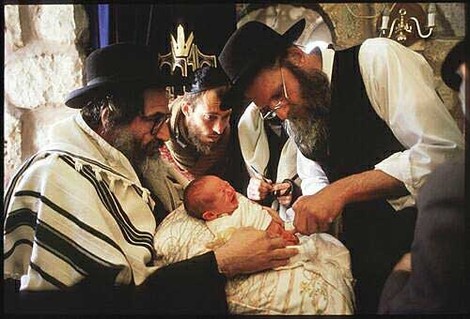
Non-medical circumcision, practiced by most Jews and Muslims, causes bodily harm and therefore is a crime, a Cologne court ruled.I expect this from Norway. A nation that blames every problem in the world on the Jews. But I keep getting told that Germany is no longer like that. That they refute their Nazi past. I guess not. I suppose that eventually they will be returning this the flag they are proudest of:
The practice is a "serious and irreversible interference in the integrity of the human body,” the Cologne district court decided, the Financial Times Deutschland newspaper reported on Tuesday.
The ruling involved the case of a Muslim doctor who performed a circumcision on a four-year-old boy, who later suffered bleeding and was taken to a hospital emergency room. The decision is likely to be appealed to the Federal Constitutional Court.
Holm Putzke of the University of Passau, who has been fighting circumcision for years, told the newspaper, “The ruling is enormously important above all for doctors because it's the first time that they have a legal certainty” that they are committing a crime.
He added, “The court has, in contrast to many politicians, not allowed itself to be scared by the fear of being criticized as anti-Semitic or opposed to religion.”
In Norway, Center Party official justice policy spokeswoman Jenny Klinge said she wants circumcision to be declared illegal, a move that would jeopardize the future of the 700-member Jewish community.
She told the Dagbladet newspaper that circumcision of girls already is prohibited and that the law should be extended to males.
Circumcision is perhaps the most widely-observed religious practice among Jews. Jewish history is marked with those who have risked their lives – and many who have lost them – for upholding the mitzvah that was first performed by the forefather Abraham.
An anti-circumcision movement in the United States last year was stopped when a petition to end the practice in San Francisco was taken off the ballot because it violated state law.
Circumcision has been credited with preventing the spread of diseases, particularly in Africa.
Source
Thursday, April 19, 2012
A Great Show Of Strength And Courage
During World War II many men and women arose to save Jews. There was Raoul Wallenberg of Sweden who saved over 100,000 people, Oskar Schindler who saved over 1200 people, and Miep Gies, Johannes Kleiman, Victor Kugler and Bep Voskuijl who tried to save the people hidden in the Secret Annex. But on this Yom HaShoah (Day of Holocaust Remembrance) I choose Chiune Sugihara, Japan's ambassador to Lithuania.

Chiune Sugihara and his wife Yukiko were people of great strength and courage. In fact they should be the model for all diplomatic personal and their families. A thing to remember on this Yom HaShoah.In the course of human existence, many people are tested. Only a few soar as eagles and achieve greatness by simple acts of kindness, thoughtfulness and humanity. This is the story of a man and his wife who, when confronted with evil, obeyed the kindness of their hearts and conscience in defiance of the orders of an indifferent government. These people were Chiune and Yukiko Sugihara who, at the beginning of World War II, by an ultimate act of altruism and self-sacrifice, risked their careers, their livelihood and their future to save the lives of more than 6,000 Jews. This selfless act resulted in the second largest number of Jews rescued from the Nazis.
In March 1939, Japanese Consul-General Chiune Sugihara was sent to Kaunas to open a consulate service. Kaunas was the temporary capital of Lithuania at the time and was strategically situated between Germany and the Soviet Union. After Hitler's invasion of Poland on September 1, 1939, Britain and France declared war on Germany. Chiune Sugihara had barely settled down in his new post when Nazi armies invaded Poland and a wave of Jewish refugees streamed into Lithuania. They brought with them chilling tales of German atrocities against the Jewish population. They escaped from Poland without possessions or money, and the local Jewish population did their utmost to help with money, clothing and shelter.
Before the war, the population of Kaunas consisted of 120,000 inhabitants, one forth of which were Jews. Lithuania, at the time, had been an enclave of peace and prosperity for Jews. Most Lithuanian Jews did not fully realize or believe the extent of the Nazi Holocaust that was being perpetrated against the Jews in Poland. The Jewish refugees tried to explain that they were being murdered by the tens of thousands. No one could quite believe them. The Lithuanian Jews continued living normal lives. Things began to change for the very worst on June 15, 1940, when the Soviets invaded Lithuania. It was now too late for the Lithuanian Jews to leave for the East. Ironically, the Soviets would allow Polish Jews to continue to emigrate out of Lithuania through the Soviet Union if they could obtain certain travel documents.
By 1940, most of Western Europe had been conquered by the Nazis, with Britain standing alone. The rest of the free world, with very few exceptions, barred the immigration of Jewish refugees from Poland or anywhere in Nazi-occupied Europe.
Against this terrible backdrop, the Japanese Consul Chiune Sugihara suddenly became the linchpin in a desperate plan for survival. The fate of thousands of families depended on his humanity. The Germans were rapidly advancing east. In July 1940, the Soviet authorities instructed all foreign embassies to leave Kaunas. Almost all left immediately, but Chiune Sugihara requested and received a 20-day extension.
Except for Mr. Jan Zwartendijk, the acting Dutch consul, Chiune Sugihara was now the only foreign consul left in Lithuanania's capital city. They had much work to do.
Now into summer, time was running out for the refugees. Hitler rapidly tightened his net around Eastern Europe. It was then that some of the Polish refugees came up with a plan that offered one last chance for freedom. They discovered that two Dutch colonial islands, Curacao and Dutch Guiana, (now known as Suriname) situated in the Caribbean, did not require formal entrance visas. Furthermore, the honorary Dutch consul, Jan Zwartendijk, told them he had gotten permission to stamp their passports with entrance permits.
There remained one major obstacle. To get to these islands, the refugees needed to pass through the Soviet Union. The Soviet consul, who was sympathetic to the plight of the refugees, agreed to let them pass on one condition: In addition to the Dutch entrance permit, they would also have to obtain a transit visa from the Japanese, as they would have to pass through Japan on their way to the Dutch islands.
On a summer morning in late July 1940, Consul Sempo Sugihara and his family awakened to a crowd of Polish Jewish refugees gathered outside the consulate. Desperate to flee the approaching Nazis, the refugees knew that their only path lay to the east. If Consul Sugihara would grant them Japanese transit visas, they could obtain Soviet exit visas and race to possible freedom. Sempo Sugihara was moved by their plight, but he did not have the authority to issue hundreds of visas without permission from the Foreign Ministry in Tokyo.
Chiune Sugihara wired his government three times for permission to issue visas to the Jewish refugees. Three times he was denied. The Japanese Consul in Tokyo wired:
CONCERNING TRANSIT VISAS REQUESTED PREVIOUSLY STOP ADVISE ABSOLUTELY NOT TO BE ISSUED ANY TRAVELER NOT HOLDING FIRM END VISA WITH GUARANTEED DEPARTURE EX JAPAN STOP NO EXCEPTIONS STOP NO FURTHER INQUIRIES EXPECTED STOP (SIGNED) K TANAKA FOREIGN MINISTRY TOKYOAfter repeatedly receiving negative responses from Tokyo, the Consul discussed the situation with his wife and children. Sugihara had a difficult decision to make. He was a man who was brought up in the strict and traditional discipline of the Japanese. He was a career diplomat, who suddenly had to make a very difficult choice. On one had, he was bound by the traditional obedience he had been taught all his life. On the other hand, he was a samurai who had been told to help those who were in need. He knew that if he defied the orders of his superiors, he might be fired and disgraced, and would probably never work for the Japanese government again. This would result in extreme financial hardship for his family in the future.
Chiune and his wife Yukiko even feared for their lives and the lives of their children, but in the end, could only follow their consciences. The visas would be signed.
For 29 days, from July 31 to August 28, 1940, Mr. and Mrs. Sugihara sat for endless hours writing and signing visas by hand. Hour after hour, day after day, for these three weeks, they wrote and signed visas. They wrote over 300 visas a day, which would normally be one month's worth of work for the consul. Yukiko also helped him register these visas. At the end of the day, she would massage his fatigued hands. He did not even stop to eat. His wife supplied him with sandwiches. Sugihara chose not to lose a minute because people were standing in line in front of his consulate day and night for these visas. When some began climbing the compound wall, he came out to calm them down and assure them that he would do is best to help them all. Hundreds of applicants became thousands as he worked to grant as many visas as possible before being forced to close the consulate and leave Lithuania. Consul Sugihara continued issuing documents from his train window until the moment the train departed Kovno for Berlin on September 1, 1940. And as the train pulled out of the station, Sugihara gave the consul visa stamp to a refugee who was able use it to save even more Jews.
After receiving their visas, the refugees lost no time in getting on trains that took them to Moscow, and then by trans-Siberian railroad to Vladivostok. From there, most of them continued to Kobe, Japan. They were allowed to stay in Kobe for several months, and were then sent to Shanghai, China. Thousands of Polish Jews with Sugihara visas survived in safety under the benign protection of the Japanese government in Shanghai. As many as six thousand refugees made their way to Japan, China and other countries in the following months. They had escaped the Holocaust. Through a strange twist of history, they owed their lives to a Japanese man and his family. They had become Sugihara Survivors.
Despite his disobedience, his government found Sugihara's vast skills useful for the remainder of the war. But in 1945, the Japanese government unceremoniously dismissed Chiune Sugihara from the diplomatic service. His career as a diplomat was shattered. He had to start his life over. Once a rising star in the Japanese foreign service, Chiune Sugihara could at first only find work as a part-time translator and interpreter. For the last two decades of his life, he worked as a manager for an export company with business in Moscow. This was his fate because he dared to save thousands of human beings from certain death.
The makings of a hero are many and complex, but Sugihara's fateful decision to risk his career may have been influenced by a simple act of kindness from an 11-year-old boy. He lived with his family in Lithuania, and his name was Zalke Jenkins (Solly Ganor).
Solly Ganor was the son of a menshevik refugee from the Russian revolution in the early 1920s. After the Russian revolution the family moved to Kaunas, Lithuania. The family prospered for years before World War II in textile import and export. Young Solly Ganor, concerned about Polish Jews entering Kaunas, gave most of his allowance and savings to the Jewish refugee boards. Having given away all of his money, he went to his aunt Annushka's gourmet food shop in Kaunas. He went there to borrow a Lithuania lit (Lithuanian dollar) to see the latest Laurel and Hardy movie. In his aunt's store he met Japanese Consul Chiune Sugihara. Consul Sugihara overheard the conversation and gave young Solly two shiny lit. Impulsively, the young boy invited the Consul with the kind eyes to his family celebration of the first night of Chanukah 1939.
The surprised and delighted Consul gratefully accepted the young boy's offer, and he and his wife Yukiko attended their first Jewish Chanukah celebration.
Mr. Sugihara commented on the closeness of the Jewish families and how it reminded him of his family, and of similar Japanese festivals. Fifty-four years later, Mrs. Sugihara remembers with delight the cakes and cookies and desserts offered to them during this Jewish festival of lights.
Solly Ganor and his father were soon friends with the Consul-General and they conversed in Russian. Later Solly Ganor and his father witnessed Consul Sugihara in his office calling the Russian officials to get permission to issue visas across the Russian borders. Solly Ganor and his father later received Sugihara visas but were unable to use them because they were Soviet citizens.
Most of the Ganor family were murdered in the Holocaust. Solly's sister Fanny and Aunt Anushka survived the war. Aunt Anushka returned to Lithuania and died in 1969. Fanny married Sam Skutelsky from Riga and eventually settled in the United States. Their son Robert, Solly's only living nephew, now lives in Boulder, Colorado.
Solly and his father spent over two years in the Kaunas ghetto before being deported to the Landsberg-Kaufering outer camps of Dachau in late 1944. They survived the war and moved to Israel. The older Ganor died peacefully in Tel Aviv in 1966.
Ironically, in May 1945, Solly Ganor was liberated by Japanese American soldiers of the 522nd Field Artillery Battalion, men who had been interned in their own country.
To Solly, the Japanese face has come to symbolize kindness and liberation.
For the last half century people have asked, "Who was Chiune Sugihara?"
They have also asked, "Why did he risk his career, his family fortune, and the lives of his family to issue visas to Jewish refugees in Lithuania?" These are not easy questions to answer, and there may be no single set of answers that will satisfy our curiosity or inquiry.
Chiune (Sempo) Sugihara always did things his own way. He was born on January 1, 1900. He graduated from high school with top marks and his father insisted that he become a medical doctor. But Chiune's dream was to study literature and live abroad. Sugihara attended Tokyo's prestigious Waseda University to study English. He paid for his own education with part-time work as a longshoreman and tutor.
One day he saw an item in the classified ads. The Foreign Ministry was seeking people who wished to study abroad and might be interested in a diplomatic career. He passed the difficult entrance exam and was sent to the Japanese language institute in Harbin, China. He studied Russian and graduated with honors. He also converted to Greek Orthodox Christianity. The cosmopolitan nature of Harbin, China opened his eyes to how diverse and interesting the world was.
He then served with the Japanese-controlled government in Manchuria, in northeastern China. He was later promoted to Vice Minister of the Foreign Affairs Department. He was soon in line to be the Minister of Foreign Affairs in Manchuria.
While in Manchuria he negotiated the purchase of the Russian-owned Manchurian railroad system by the Japanese. This saved the Japanese government millions of dollars, and infuriated the Russians.
Sugihara was disturbed by his government's policy and the cruel treatment of the Chinese by the Japanese government. He resigned his post in protest in 1934.
In 1938 Sugihara was posted to the Japanese diplomatic office in Helsinki, Finland. With World War II looming on the horizon, the Japanese government sent Sugihara to Lithuania to open a one-man consulate in 1939. There he would report on Soviet and German war plans. Six months later, war broke out and the Soviet Union annexed Lithuania. The Soviets ordered all consulates to be closed. It was in this context that Sugihara was confronted with the requests of thousands of Polish Jews fleeing German-occupied Poland.
Sugihara's personal history and temperament may contain the key to why he defied his government's orders and issued the visas. Sugihara favored his mother's personality. He thought of himself as kind and nurturing and artistic. He was interested in foreign ideas, religion, philosophy and language. He wanted to travel the world and see everything there was, and experience the world. He had a strong sense of the value of all human life. His language skills show that he was always interested in learning more about other peoples.
Sugihara was a humble and understated man. He was self-sacrificing, self-effacing and had a very good sense of humor. Yukiko, his wife, said he found it very difficult to discipline the children when they misbehaved. He never lost his temper.
Sugihara was also raised in the strict Japanese code of ethics of a turn-of-the-century samurai family. The cardinal virtues of this society were oya koko (love of the family), kodomo no tamene (for the sake of the children), having gidi and on (duty and responsibility, or obligation to repay a debt), gaman (withholding of emotions on the surface), gambate (internal strength and resourcefulness), and haji no kakete (don't bring shame on the family). These virtues were strongly inculcated by Chiune's middle-class rural samurai family.
It took enormous courage for Sugihara to defy the order of his father to become a doctor, and instead follow his own academic path. It took courage to leave Japan and study overseas. It took a very modern liberal Japanese man to marry a Caucasian woman (his first wife; Yukiko was his second wife) and convert to Christianity. It took even more courage to openly oppose the Japanese military policies of expansion in the 1930s.
Thus Sempo Sugihara was no ordinary Japanese man and may have been no ordinary man. At the time that he and his wife Yukiko thought of the plight of the Jewish refugees, he was haunted by the words of an old samurai maxim: "Even a hunter cannot kill a bird which flies to him for refuge."
Today, more than 50 years after those 29 fateful days in July and August of 1940, there may be more than 40,000 who owe their lives to Chiune and Yukiko Sugihara. Two generations have come after the original Sugihara survivors, all owing their existence to one modest man and his family. After the war, Mr. Sugihara never mentioned or spoke to anyone about his extraordinary deeds. It was not until 1969 that Sugihara was found by a man he had helped save, Mr. Yehoshua Nishri. Soon, hundreds of others whom he had saved came forward and testified to the Yad Vashem (Holocaust Memorial) in Israel about his life saving acts of courage. After gathering testimonies from all over the world, Yad Vashem realized the enormity of this man's self-sacrifice in saving Jews. And so it came to pass that in 1985 he received Israel's highest honor. He was recognized as "Righteous Among the Nations" by the Yad Vashem Martyrs Remembrance Authority in Jerusalem.
By then a old man near death, he was too ill to travel to Israel. His wife and son received the honor on his behalf. Further, a tree was planted in his name at Yad Vashem, and a park in Jerusalem was named in his honor.
Forty-five years after he signed the visas, Chiune was asked why he did it. He liked to give two reasons: "They were human beings and they needed help," he said. "I'm glad I found the strength to make the decision to give it to them." Sugihara was a religious man and believed in a universal God of all people. He was fond of saying, "I may have to disobey my government, but if I don't I would be disobeying God."
Consul Chiune Sugihara, age 86, died on July 31, 1986. Mrs.Yukiko Sugihara, age 94, passed away on October 8, 2008.


Wednesday, January 6, 2010
Justice Is Served!
On June 10, 2009, shortly before 1 pm, James von Brunn entered the Holocaust Museum in Washington DC and proceeded to open fire upon the patrons inside. Stephen Tyrone Johns, a humble security guard with a heart of gold, was killed trying to subdue von Brunn. (A scholarship fund has been set up for his children. You can contribute to it here.)
It has been nearly 7 months and von Brunn has not been brought to trial. And he never will be.
There is one being who is dancing for joy over this.

It has been nearly 7 months and von Brunn has not been brought to trial. And he never will be.
At Butner federal prison in North Carolina, spokeswoman Denise Simmons announced that James von Brunn died shortly before 1 p.m. Wednesday.Now some people would question the assumption that Justice has been served for Stephen Johns, but I contend that von Brunn is now in front of the highest court in the Universe, before the greatest Judge that could ever be, and HIS judgement on von Brunn will be swift. There will be NO APPEAL from this court.
Simmons said von Brunn had "a long history of poor health which included chronic congestive heart failure and sepsis." She said he was pronounced dead at a local hospital.
Von Brunn's lawyer, A.J. Kramer, called the death "a sad end to a tragic situation," but declined further comment.
Von Brunn had been awaiting trial for the killing of security guard Stephen T. Johns at the U.S. Holocaust Memorial Museum on June 10. Von Brunn had been wounded by return fire.
Read the full story here.
There is one being who is dancing for joy over this.

He is eagerly awaiting his disciple!
Saturday, August 8, 2009
America Versus the Nazis
by Maggie at Maggie's Notebook
Jim Simpson at Truth & Consequences put the following post up at Maggie's Notebook. Please note this comment in the article:
Jim Simpson at Truth & Consequences put the following post up at Maggie's Notebook. Please note this comment in the article:
If you care at all about this issue, or for that matter the future of this country, it would behoove you to know just how the thugs operate when Americans stand up for themselves. This is a REAL fight, right now. And it is about power, theirs versus America's. Make sure you understand that! They are coming out of hiding, which means they think they will winI hope you will read Jim's article, follow the link and see what we are facing.
*****
Since grandmothers, WW II veterans and average Americans like you and me are now being branded Nazis for expressing our opposition to the monstrousity Obamacare, Obama has rallied his army of REAL Nazi thugs to protest our protest. Chief among the "spontaneous" counterprotesting groups is "Healthcare for America Now" (HCAN). Why does that acronym sound so much like ACORN? Well because it IS ACORN, and a million other highly organized radical leftist organizations just like it. Ben Johnson at FrontPage Magazine has laid it all out in the following article: Soros Care.
If you care at all about this issue, or for that matter the future of this country, it would behoove you to know just how the thugs operate when Americans stand up for themselves. This is a REAL fight, right now. And it is about power, theirs versus America's. Make sure you understand that! They are coming out of hiding, which means they think they will win. We can't allow them to. If the thugs win on this, they can win on anything. And they will.
If you care at all about this issue, or for that matter the future of this country, it would behoove you to know just how the thugs operate when Americans stand up for themselves. This is a REAL fight, right now. And it is about power, theirs versus America's. Make sure you understand that! They are coming out of hiding, which means they think they will win. We can't allow them to. If the thugs win on this, they can win on anything. And they will.
Subscribe to:
Posts (Atom)