Quote of the day!
Je Suis Charlie!
KEEP YOUR POWDER DRY!!!!
Showing posts with label Sunspots. Show all posts
Wednesday, October 22, 2014
Solar Eclipse on Thursday, October 23rd.
Solar activity is surging on the eve of Thursday's solar eclipse. Giant sunspot AR2192 is crackling with M- and X-class solar flares as the Moon approaches the sun for a partial eclipse that will be visible across almost all of North America on Oct. 23rd. The eclipse will be particularly beautiful in the Central Time Zone where maximum coverage occurs at sunset.
SOLAR FLARE ALERT: Giant sunspot AR2192 is poised to erupt again.
For more information on AR2192 or other solar flares head on to SpaceWeather.com.
Friday, July 5, 2013
Big Sunspot Turns Towards Earth
From Space Weather
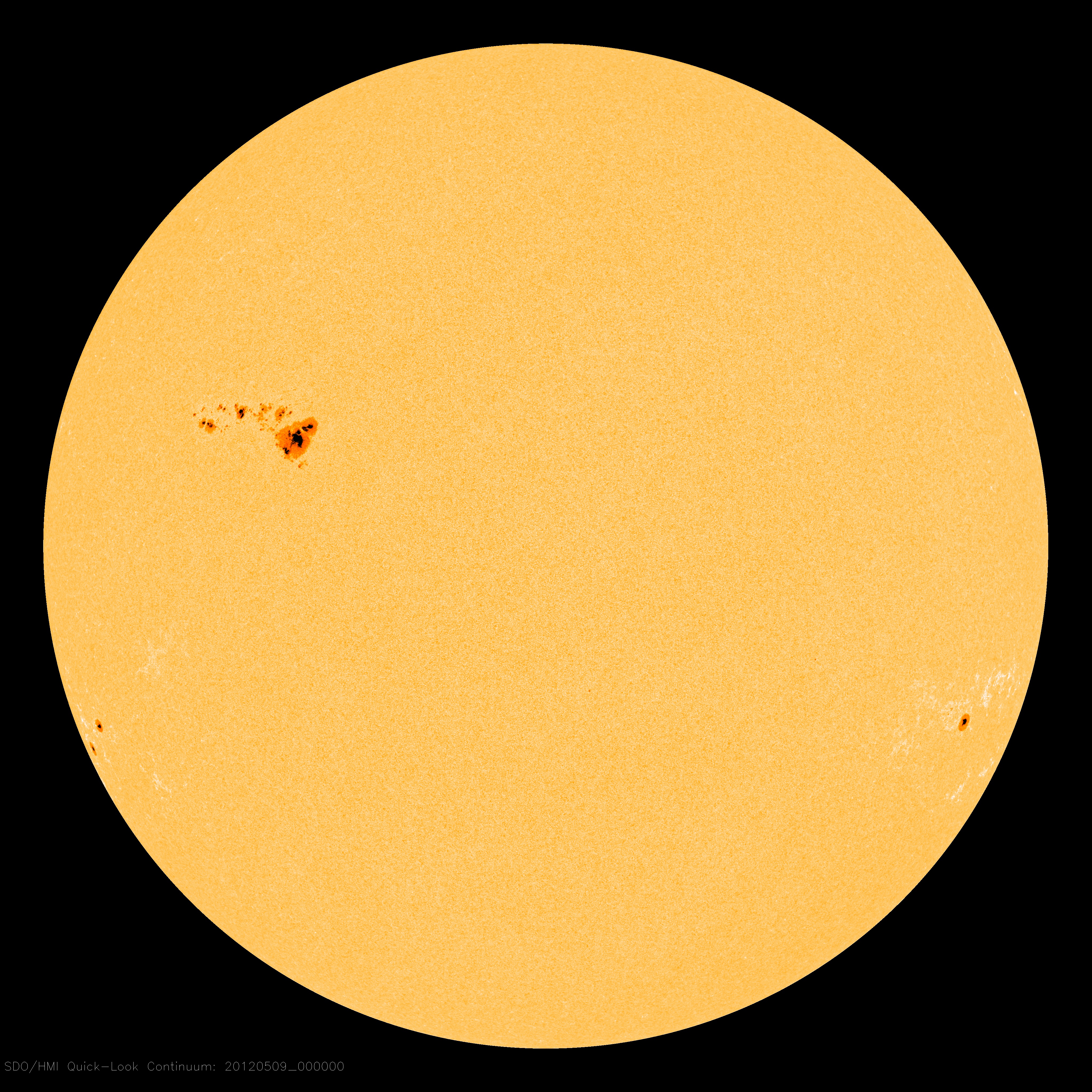
BIG SUNSPOT: One of the biggest sunspot groups of the current solar cycle has emerged in the sun's southern hemisphere. AR1785 has an unstable magnetic field that harbors energy for strong solar flares, and it is turning toward Earth.
These sunspots are a sign that the sun's southern hemisphere is waking up. For most of the current solar cycle, the northern half of the sun has dominated sunspot counts and flare production. The south has been lagging behind--until now. June brought a surge in southern sunspots, and the trend is continuing in July. This "southern awakening" could herald a double-peaked Solar Maximum due in late 2013-early 2014.
The largest dark cores in sunspot complex AR1785-1787 are as wide as Earth, making the ensemble an easy target for backyard solar telescopes. Amateur astronomers are encouraged to monitor developments, as NOAA forecasters estimate a 40% chance of M-flares during the next 24 hours
Check http://spaceweather.com for more information and updates.
Friday, January 11, 2013
Space Weather Alert
ACTIVE SUNSPOT: One of the biggest sunspots of the current solar cycle is now turning toward Earth. Named AR1654, the active region is crackling with medium-sized (M-class) flares and could be poised to break the recent spell of calm space weather around our planet.
INCREASING CHANCE OF FLARES: Big sunspot AR1654 is growing more active. It is now crackling with M-class solar flares, such as this one recorded by NASA's Solar Dynamics Observatory this morning at 09:11 UT:
AR1654 is getting bigger as it turns toward Earth. Not only is the chance of flares increasing, but also the chance of an Earth-directed eruption.This could be the sunspot that breaks the recent lengthy spell of calm space weather around our planet.
For more information visit SpaceWeather.com
Thursday, May 10, 2012
Big Sunspot Crackling With Flares And Radio Bursts
Heads Up People. The Sun, our Star is acting up again.
From SpaceWeather:
Huge sunspot AR1476 is crackling with M-class solar flares and appears to be on the verge of producing something even stronger. The sunspot's 'beta-gamma-delta' magnetic field harbors energy for X-class flares, the most powerful kind. Radio operators are recording strong bursts of shortwave static from the sunspot as it turns toward Earth.Expect atmospherics to act up for a while, the Northern Lights should be spectacular for those who can view them. But be warned that radio signals will be experiencing problems for the next few days.
Earlier today, amateur astronomer Thomas Ashcraft of New Mexico detected strong shortwave radio bursts coming from the sunspot. Click to hear the "solar static" that roared out of his loudspeaker.
"The strongest burst so far occured around 1631 UT on May 9th," reports Ashcraft. "I am observing at 28 MHz and 21.1 MHz. As I send this note I am hearing more bursting, indicating powerful magnetic dynamism within active region 1476."
Solar radio bursts are caused by plasma instabilities that ripple through the sun's atmosphere in the aftermath of powerful flares. With AR1476 poised for more eruptions, this 'radio activity' is likely to continue for days.
Thursday, January 19, 2012
Earth-Directed Solar Flare Could Bring Geomagnetic Storms This Weekend
Plus a possible disruption of electronics.
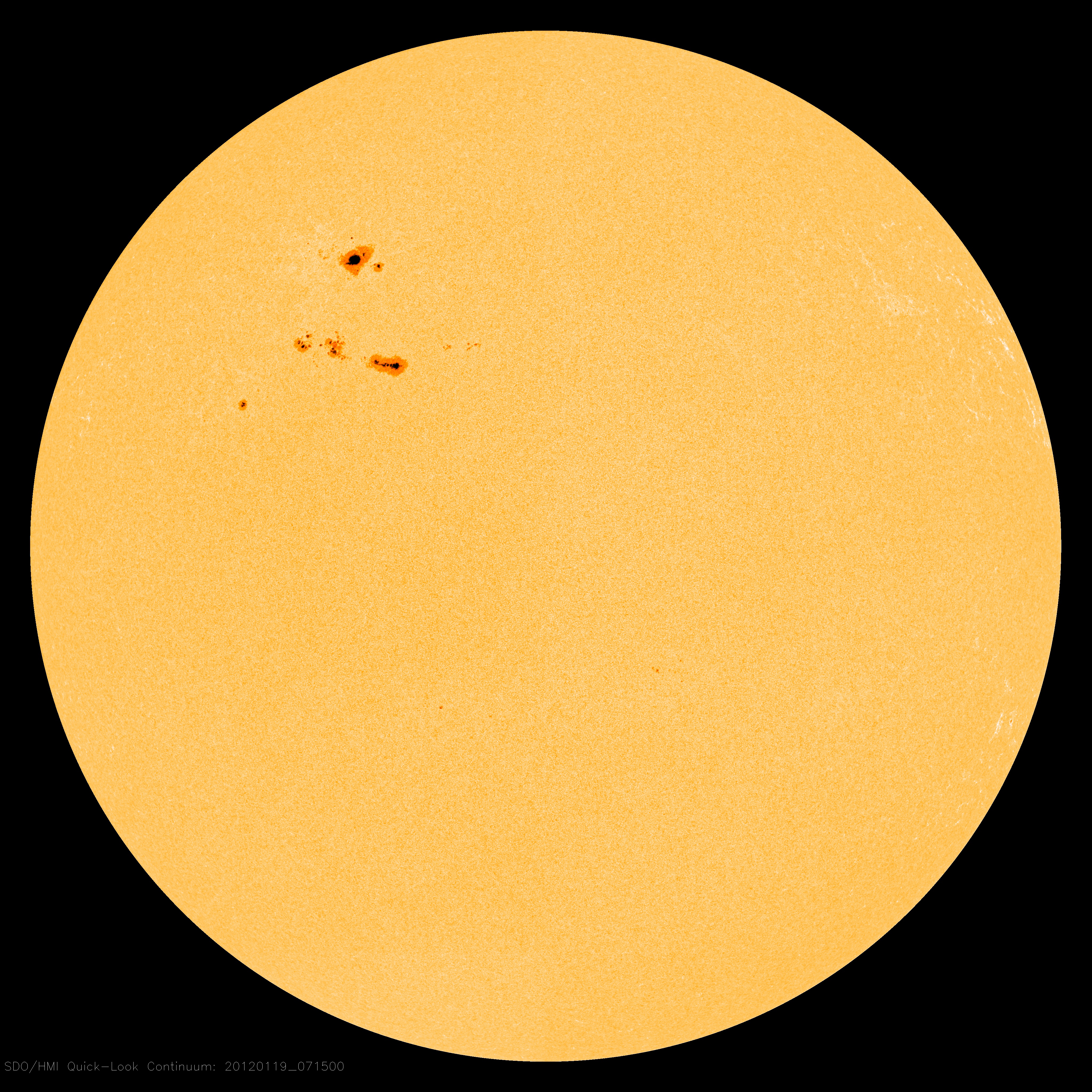
EARTH-DIRECTED FLARE: Active sunspot 1401 erupted today, Jan. 19th, for more than an hour around 16:00 UT. The long-duration blast produced an M3-class solar flare and a CME that appears to be heading toward Earth. Forecasters say strong geomagnetic storms are possible when the cloud arrives during the late hours of Jan. 21st. High-latitude (and possibly middle-latitude) sky watchers should be alert for auroras this weekend.Discover more about Sunspots, Solar Flares and other Space Weather issues at SpaceWeather.com.
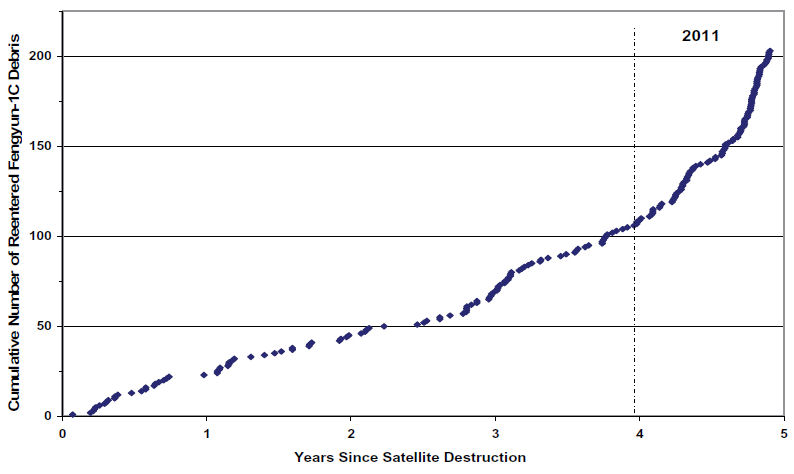
INCREASING SOLAR ACTIVITY CLEANS UP SAT-DEBRIS: Earth's atmosphere has been puffing up in response to increasing levels of UV radiation from sunspots. This is good news for satellite operators, because a puffed up atmosphere helps clean up low-Earth orbit. "The number of cataloged debris in Earth orbit actually decreased during 2011," reports Nick Johnson in NASA's Orbital Debris Quarterly newsletter. "[The figure below] illustrates how the rate of debris reentries from the Fengyun-1C anti-satellite test of January 2007 increased during the past year."
"Even though only 6% of the total 3218 cataloged debris from the ill-advised engagement had reentered by the end of 2011, half of these debris fell out of orbit in the past 12 months," he points out. "Likewise, many debris from the 2009 accidental collision of Cosmos 2251 and Iridium 33 are accelerating their departure from Earth orbit. In the absence of a new major satellite breakup, the overall orbital debris population should continue to decrease during 2012 and 2013."
And remember to Keep Watching the Skies!
Saturday, January 10, 2009
Comet Lulin Cometh!
Comet Lulin (C/2007 N3), discovered in 2007 by a collaborative team of Taiwanese and Chinese astronomers, is swinging around the sun and approaching Earth. The photogenic comet has a bright tail and an "anti-tail" visible in mid-sized backyard telescopes. This comet will pass 0.41 AU from Earth on 24February 2009, At closest approach , Comet Lulin is expected to brighten to naked-eye visibility.For the second time this week, a sunspot is coalescing on the surface of the sun. The spot's high latitude and magnetic polarity identify it as a member of new Solar Cycle 24; its appearance continues a recent trend of gradually intensifying new-cycle solar activity. The spot is growing rapidly and may soon provide a nice target for backyard solar telescopes.
This weekend's full Moon is the biggest and brightest of 2009. It's a "perigee Moon" as much as 50,000 km closer to Earth than other full Moons we'll see later this year. Perigee moonlight shining through icy winter air can produce beautiful halos, coronas, moondogs and other atmospheric optics phenomena.
If you are lucky you will have a spectacular moon this weekend. If you are like me and expecting snow all weekend, you will miss it. But you can catch some of the action at SpaceWeather.com, a great place to find out more about the sky above us.
Subscribe to:
Posts (Atom)