Showing posts with label Orionid Meteor Shower. Show all posts

Sunday, October 20, 2013

ORIONID METEOR SHOWER


Earth is passing through a stream of debris from Halley's Comet, source of the annual Orionid meteor shower.  Forecasters expect the shower to peak on Oct. 21st with approximately 20 meteors per hour.  Bright moonlight will reduce visibility, however. The best time to look is during the hours before local sunrise when the shower's radiant in the constellation Orion is high in the sky.

Lunar interference will be a problem during the peak. All but the brightest Orionids will be wiped out by glare from the waning full Moon. Fortunately there are some bright ones. NASA's All Sky Fireball Network captured this Orionid fireball shining through the moonlight over Georgia on the morning of Oct. 20th:


Check with SpaceWeather.com for more information.

Thursday, October 21, 2010

A Comet and Meteor Shower


SUNDIVING COMET: A newly-discovered comet is plunging toward the sun for a close encounter it probably will not survive. The comet is too deep in the sun's glare for human eyes to pick out, but it is showing up nicely in coronagraph images from the Solar and Heliospheric Observatory. Visit Spaceweather.com for latest movies.


ORIONID METEOR SHOWER: Earth is passing through a stream of debris from Halley's Comet, and this is causing the annual Orionid meteor shower. Bright moonlight is reducing the number of visible meteors; nevertheless, sky watchers are reporting some bright Orionids. The best time to look is during the hours before local dawn on Thursday, Oct. 21st, and again on Friday, Oct. 22nd. Check Spaceweather.com for a sky map and more information.

Have fun watching the skies!

Tuesday, October 20, 2009

The Orionids Are Coming!


The Orionids generally begin on October 15 and continue until October 29.

Earth is entering a stream of dusty debris from Halley's Comet, and this is causing the annual Orionid meteor shower. If forecasters are correct, the shower will peak on Wednesday morning, Oct. 21st, with dozens of meteors per hour. The best time to look is during the dark hours before local dawn.

For the past three years, Orionid rates have been unusually high, with reports of 60 or more meteors per hour. Researchers believe this is a result of some very old and rich debris from Comet Halley drifting across Earth's orbit. Computer models of the debris suggest that it is still in the neighborhood, so the trend of "good Orionids" could continue in 2009. Visit Spaceweather for photos and updates.

Enjoy the night sky, its wonderful to watch on a cool autumn night.

Monday, October 20, 2008

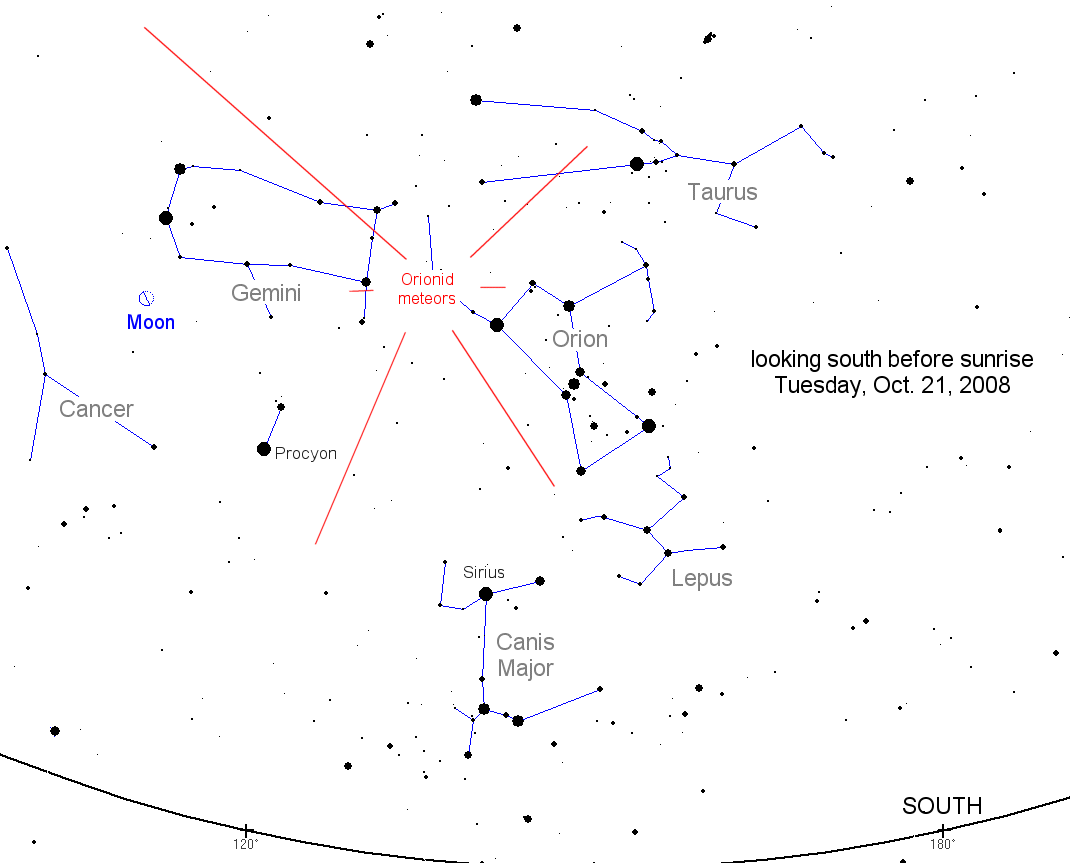
Orionid Meteor Shower


The Orionid meteor shower is the second of two showers that occur each year as a result of Earth passing through dust released by Halley's Comet, with the first being the Eta Aquarids. The point from where the Orionid meteors appear to radiate is located within the constellation Orion.

The Orionids generally begin on October 15 and end on October 29, with maximum generally occurring during the morning hours of October 20-22. The Orionids are barely detectable on the beginning and ending dates, but observers in the Northern Hemisphere will see around 20 meteors per hour at maximum, while observers in the Southern Hemisphere will see around 40 meteors per hour. The maximum can last two or three nights, although there is evidence of some fluctuation from year to year.

ORIONID METEOR WATCH: If you wake up before sunrise on Tuesday, Oct. 21st, set aside 15 minutes or so to watch the sky around Orion. You might see some meteors. The annual Orionid meteor shower, caused by dusty debris from Halley's Comet, is peaking today and tomorrow. Little was expected of this year's display because a bright Moon is hanging in the pre-dawn sky, causing an interfering glare. Surprisingly, however, sky watchers on Oct. 20th witnessed 15 or more Orionids per hour, many of them brighter than first magnitude stars. If this stronger-than-expected display spills into Tuesday, you might be glad to wake up early. Check spaceweather for updates and a sky map.